The Contractor Fight® helps residential contractors build more profitable, predictable businesses through better numbers, marketing, sales, production, leadership and execution.
The goal isn’t to build a bigger contracting business. It’s to build a business worth having.
Bigger doesn’t always mean better.
I’ve coached contractors who grew revenue, added trucks, hired employees and took on more work only to make about the same amount of money they made when the company was half the size.
Sometimes less.
More overhead.
More people.
More problems.
More stress.
And everything still runs through them.
That’s not growth.
That’s a bigger prison.
A business worth having is a business that gives you the life you want, whatever that looks like for you.
Maybe you want to build a $20 million company.
Great.
Maybe you want a highly profitable $2 million company, work fewer hours, take your kids to school and disappear for a few weeks every summer.
Great.
Your business should serve your life. Not consume it.
That’s what contractor business coaching should help you build.
Contractor business coaching helps you get clear on where your business is today, where you want it to go, and what needs to change to close the gap.
Every high performer has weaknesses.
There are things you’re naturally good at. Things you’ve learned through experience. And things you struggle with, avoid or simply haven’t learned yet.
A good coach has been a lap, two laps or ten laps ahead of you.
They’ve dealt with bad hires.
They’ve screwed up pricing.
They’ve had cash problems.
They’ve built teams.
They’ve made marketing mistakes.
They’ve learned how to sell.
They’ve built systems.
They’ve had to lead when they didn’t feel like leading.
You get the benefit of those scars without having to earn every one yourself.
Good coaching collapses time.
Sometimes you need somebody to tell you exactly what to do.
Sometimes you need somebody to ask better questions.
Sometimes you need a framework.
Sometimes you need an operating system.
And sometimes you need somebody willing to tell you that the biggest problem in your business isn’t your employees, your customers, the economy or your leads.
It’s you.
A good contractor coach shouldn’t just help you “grow.”
They should help you build a stronger business.
Pricing, gross profit, net profit, cash and financial clarity.
Positioning, trust, lead generation and marketing performance.
Qualification, sales meetings, money conversations, closing and follow-up.
Estimating, job costing, scheduling, communication and protecting profit.
Hiring, roles, delegation and accountability.
Standards, communication and developing people who own outcomes.
Scoreboards, processes and operating rhythms.
Building a company that doesn’t require the owner in every decision.
The exact problem is different for every contractor.
That’s why blindly prescribing more leads, more people or better software is bullshit.
Diagnose before you prescribe.
I hear this all the time.
Usually the contractor knows something hurts, but he hasn’t diagnosed the actual problem.
He’s not making enough money.
He’s working too much.
Everything depends on him.
His team isn’t taking ownership.
Lead flow sucks.
Sales are inconsistent.
Cash always feels tight.
So he says:
“I need to grow.”
Then he starts thinking:
More leads.
More sales.
More employees.
More trucks.
More jobs.
Maybe.
But first I want to know:
What are your numbers right now?
Where is the business actually leaking?
What problem are you expecting growth to solve?
Because if we don’t answer those questions first, growth can make your life worse.
If you’re doing $1 million and tell me you want to get to $3 million, I’m not automatically helping you get to $3 million.
First I want to know whether your $1 million company is worth tripling.
Are you profitable?
Do you know your numbers?
Are you pricing correctly?
Are you job costing?
Is your marketing predictable?
Does your sales process work?
Can production deliver what sales promised?
Do your people own outcomes?
Can you leave for a week without the place catching on fire?
What’s happening at home?
And what condition are you in?
YOU’RE NOT JUST SCALING REVENUE.
YOU’RE SCALING CHAOS OR ORDER.
If your $1 million business is a mess and we triple it, we probably just created a $3 million mess.
More employees.
More overhead.
More customers.
More cash required.
More problems landing back on your desk.
Don’t scale a turd.
Get the business strong.
Then earn the right to grow.
REVENUE
NET
HOURS/WEEK
I talked to a contractor doing about $8 million a year.
From the outside, people thought he was killing it.
He was running around 3% net profit.
He paid himself about $250,000.
And he was working 60 to 70 hours a week.
He fucking hated his life.
That’s what happens when you never get clear about what you actually want.
How much money do you want to make?
How much do you want to work?
What do you want your days to look like?
What role do you want inside the company?
What do you want your family to experience because you own the business?
How much is enough?
Don’t build your company around somebody else’s scoreboard.
Revenue is loud.
Profit is quiet.
Systems matter.
KPIs matter.
Org charts matter.
Processes matter.
Marketing matters.
Sales matters.
Production matters.
We coach all of it.
But every one of those things has something in common.
A human being has to execute them.
That’s why The Contractor Fight® doesn’t start with your CRM.
We start with you.
Success is an inside-out game.
If your personal discipline sucks, eventually it shows up in your company.
If you’re unhealthy, exhausted and constantly breaking promises to yourself, it shows up.
If your family gets the scraps after your business gets the best 12 hours of you every day, it shows up.
You can have great revenue and still be losing.
You can have great systems and still be losing.
You can have 50 employees and still be losing.
The first fight is always with yourself.
The Fight OS is The Contractor Fight®’s framework for building a more profitable contracting company that gives the owner more control and becomes less dependent on them over time.

If you don’t know your numbers, you’re guessing.
Understand what the company costs to operate, what your jobs need to sell for, what gross profit you’re producing, where your cash is going and whether the company is actually making money.

Hope isn’t a marketing plan.
And track the numbers so you know what is actually producing leads, sales and profit.

Sales isn’t showing up, measuring something and emailing an estimate.
Command the entire process.
Qualify before giving away your time.
Understand why the customer really wants the project.
Talk about money.
Lead the meeting.
Ask for the sale.
Follow up like a professional.

A profitable sale can become an unprofitable job pretty damn fast.
Production has to deliver what sales promised without the owner babysitting every project.

Eventually, you can’t do everything.
And you shouldn’t.
The goal isn’t simply delegation.
It’s ownership.

Your business doesn’t improve because you went to a conference and got fired up for three days.
It improves because the right actions happen repeatedly.
Inspect what you expect.
Stop guessing.
Find out where your business is strong, where it’s leaking and what deserves your attention next.
Free Build a Business Worth Having Scorecard.
One reason contractors stay stuck is lack of focus.
More leads.
Hire a project manager.
New CRM.
Fix sales.
Facebook ads.
Write SOPs.
Hire an office manager.
New website.
They start five things and finish none of them.
We want the first domino.
What’s the one issue that, if we fix it, makes several other problems easier?
Maybe you think you need more leads.
Then we look under the hood.
You’re slow getting back to people.
You’re not qualifying.
You’re meeting people who were never going to buy.
You avoid talking about money.
You don’t lead the meeting.
You don’t follow up.
Your close rate sucks.
You don’t need another 100 leads yet.
You need to stop wasting the ones you already have.
Fix the leak before you pour more water into the bucket.
Pay attention if:
01You’ve been stuck around the same revenue for years and it isn’t intentional.
02Revenue is increasing but you’re working more.
03Revenue is increasing but your income isn’t.
04Your net profit percentage drops as the business grows.
05You don’t confidently know your numbers.
06Everything important still needs your approval.
07You can’t leave for a week without being pulled back in.
08Sales depend on you.
09Production problems constantly land on your desk.
10You have a revolving door of teammates.
11Lead flow is inconsistent.
12You waste time on bad leads.
13Repeat and referral business is weaker than it should be.
14You keep starting things and rarely finish them.
15Your business looks better from the outside than it feels from the inside.
One of these doesn’t automatically mean you need coaching.
But if you just recognized your entire week, it’s probably time for another set of eyes.
One of our strongest fits is the established residential contractor doing roughly $750,000 to $1.5 million a year who has already proven he can do good work.
01 You’ve got a reputation.
02 Good reviews.
03 Maybe some administrative help.
04 Maybe a few crews or subcontractors.
Quality isn’t your biggest problem.
But you’ve hit a wall.
You’re doing $750,000 and barely making more than you made at $500,000.
Or you crossed $1 million and somehow you’re working more than ever.
You don’t necessarily want to stop being involved.
You want to stop being required.
You want to hit the gym.
Take your kids to school.
Have breakfast with your wife.
Walk into the office knowing the day already started without you.
Visit a job because you want to.
Shake the customer’s hand.
Talk with your team.
Work on the future.
Then leave knowing the right people own sales, production, marketing, admin and money.
That’s the direction we’re trying to take you.
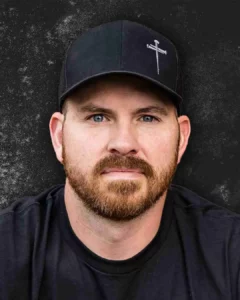
Anthony is a general contractor.
When he came into our world, the company was doing roughly $300,000 a year and he was paying himself about $12,000.
His pricing was wrong.
He didn’t understand his numbers.
Sales needed work.
Production had problems.
Everything went through him.
The first thing Anthony changed wasn’t software.
It was Anthony.
He got his head right.
He learned his numbers.
He increased his belief in his own value and stopped giving that value away for free.
Then he started pricing work profitably while delivering a great customer experience.
$2.5M
Within 12 months at 50% gross profit.
$5.1M
50% gross profit. 31% net after Anthony was paid.
That’s not just more revenue.
That’s a stronger business.

Bernardo owns a painting company.
He used to run site visits almost every day.
Even Sundays.
He was away from his wife.
He was missing time with his girls.
And a lot of those appointments weren’t becoming jobs anyway.
30%
His close rate was around this.
85%
On the appointments he runs.
Bernardo learned how to communicate differently.
He learned to understand why customers really wanted the work.
He took command of his sales process and became more selective about who deserved an appointment.
But the close rate isn’t my favorite part.
Bernardo says the changes helped him become a better salesperson, business owner, boss, husband, father and friend.
That’s a business worth having.
One of our landscape contractors reported that after six months in the program he had netted 10 times the profit compared with the first six months of the previous year and four times the profit he made during the entire previous year.
He also:
Doubled his salary.
Got completely off the tools.
Hired his first project manager.
Got the project manager off the tools.
Gave employees significant raises.
Implemented a benefits package.
That’s why we care so much about profit.
Profit creates options.
Don’t choose a coach simply because they owned the exact same trade as you.
Trade experience matters.
But healthy businesses still require the same fundamentals:
Numbers.
People.
Leadership.
Communication.
Marketing.
Sales.
Operations.
Profit.
And find somebody willing to push you.
You don’t need another company that’s happy to swipe your card every month while you hide.
You need somebody willing to have the conversation you’ve been avoiding.
Not everybody should give us money.
If you think joining a coaching program magically improves your business, don’t join.
If you’re unwilling to get uncomfortable, don’t join.
If you won’t execute, don’t join.
If you refuse to tell yourself the truth, don’t join.
And if every problem in your business is somebody else’s fault, we’re definitely not for you.
Your employees.
Your customers.
Your market.
Your competitors.
The economy.
Your spouse.
Your leads.
At some point you have to look in the mirror.
You are 100% responsible for where you are today. Good or bad.
That doesn’t mean you control everything that happens.
It means you own what you do next.
And if you’re not willing to implement what you’re learning, save your money.
Spend it somewhere else.
The goal of coaching isn’t to make you dependent on your coach forever.
And the goal of growing your company isn’t to make the company increasingly dependent on you.
You’re trying to build capability.
Better numbers.
Better marketing.
Better sales.
Better production.
Better people.
Better leaders.
Better operating rhythms.
Eventually your role changes.
You stop being the guy catching everything that falls.
You become the person setting direction, developing people and holding the standard.
Maybe you stay the face of the company.
Maybe you keep selling because you love sales.
Maybe you visit jobs because you enjoy your customers.
Maybe you spend your time developing leaders.
Maybe you build it so well that you disappear for weeks at a time.
That’s your call.
You don’t necessarily want to stop being involved.
You want to stop being required.
The cost depends on the program, the level of access and the type of coaching.
Some programs are primarily group training and community. Others include individual coaching, implementation help, events, tools or direct access to experienced operators.
The better question isn’t only, “What does coaching cost?”
Ask:
What is the problem I need to solve already costing me?
Bad pricing costs money.
Weak sales costs money.
Poor hiring costs money.
And being unable to leave your business costs you time.
No.
Trade experience can help, but the fundamentals of a healthy contracting company cross trades.
Financial management, sales, marketing, hiring, leadership, systems, accountability and profit matter whether you’re a painter, remodeler, roofer, landscaper or another residential contractor.
A coach can be valuable when you’ve plateaued, growth is creating more chaos, profit isn’t keeping pace with revenue, everything still depends on you or you know what you should be doing but aren’t consistently doing it.
You don’t have to wait until the business is on fire.
Yes, but getting out of the field doesn’t mean dumping your responsibilities onto somebody else.
You need enough profit to hire the right people, clear ownership, strong leadership and systems that allow other people to succeed.
The goal isn’t escaping work.
It’s creating a role you chose.
It should.
A healthy contracting business needs both consistent opportunities and a repeatable process for converting the right opportunities into profitable work.
At The Contractor Fight®, marketing and sales are separate parts of the Fight OS because creating a lead and converting a lead are different skills.
We work with contractors at different stages, but BATTLEGROUND is especially relevant to established contractors who already produce quality work and want more profit, stronger systems, better leadership and less owner dependence.
A common sweet spot is roughly $750,000 to $1.5 million in annual revenue, although revenue alone does not determine fit.
Consulting generally focuses on giving direct recommendations and solutions.
Coaching may include direct advice, but it also uses questions, accountability, frameworks and implementation to help the owner become better at making decisions and leading the company.
At The Contractor Fight®, we use both depending on what the contractor needs.
Some changes can produce results quickly.
Pricing changes, stronger qualification or improving the sales process can have an immediate impact.
Building leaders, systems, financial strength and a company that depends less on the owner takes longer.
There is no magic timeline.
The speed of improvement depends heavily on how consistently the owner and team implement.
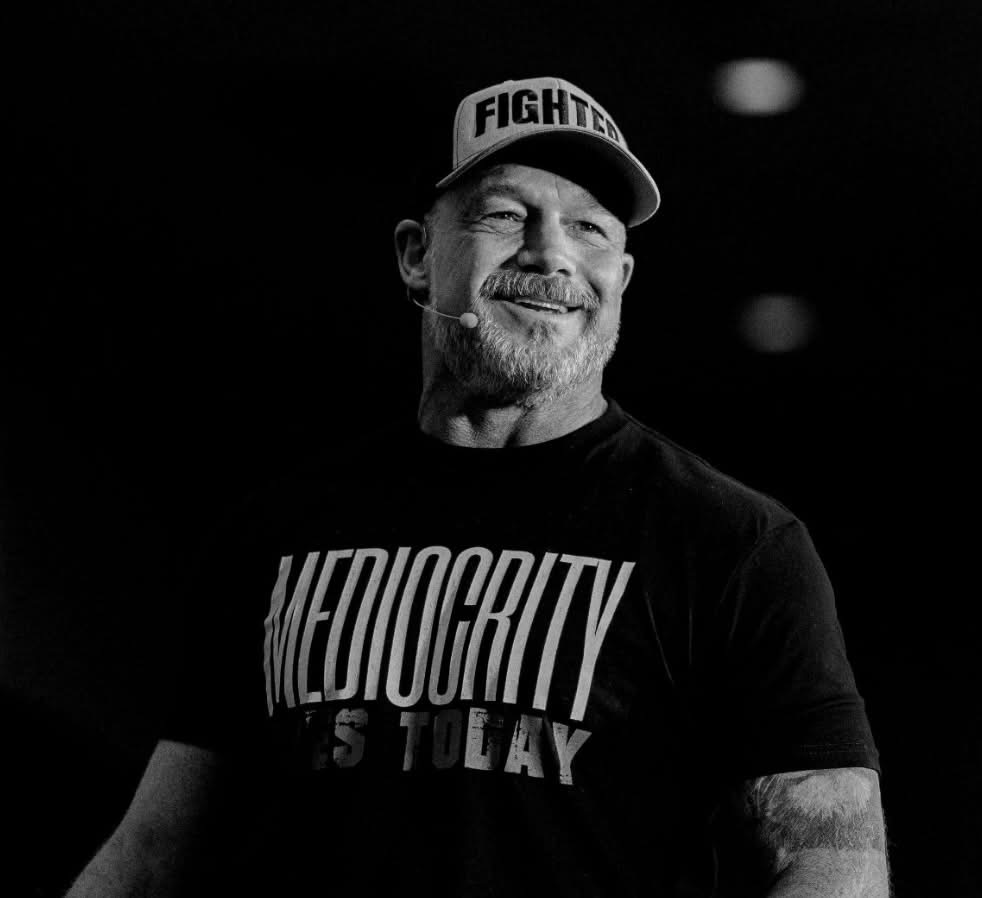
I’m Tom Reber, founder of The Contractor Fight®.
I’ve spent decades in the contracting industry as a contractor, business owner, salesperson, coach and leader.
I’ve built companies.
I’ve screwed things up.
I’ve made bad hires.
I’ve had money problems.
I’ve avoided conversations I should’ve had.
And I’ve built successful things that didn’t always feel successful.
I’ve also spent years coaching contractors through many of those same fights.
That’s why I’m not interested in helping you build a company that simply looks successful from the street.
The first fight is with yourself.
Then your job is to build a business that supports the life you actually want.

Find out where your business is strong, where it’s leaking and what deserves your attention next.